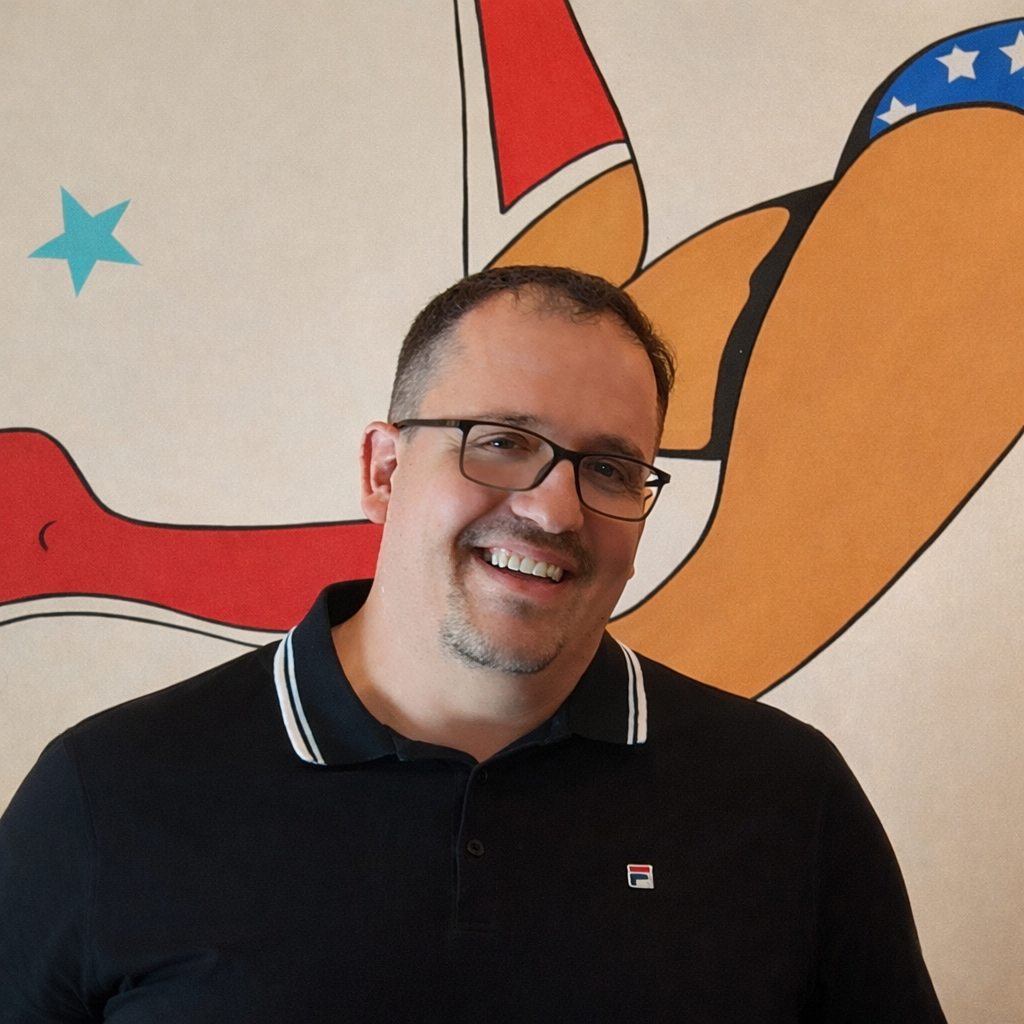

So first of all, what do you do at Trackingplan?
All of TP's founders have a strong technical background, and so do I. In a single week, I can work on several projects, from new features and bug fixes in our frontend to core ingest infrastructure or client SDK enhancements for analytics collection. And since the irruption of AI, all this gets easier to drive for a single person.
What’s a day in the life of Jose like?
I get up at 7:00 am in the morning, take my lovely 3yo son to kindergarten, come back home for breakfast with my wife and sit in front of my computer at 9:00am to work. The team has dailies so we stay aligned. I know what I have to do every day. The funny thing is that most of the time it aligns well with what I want to do as well :). We are a small team so days are similar in structure but they may differ a lot in the kind of tasks you face every day: customer support cases, custom features to close deals, debugging tasks, research tasks, and we have fires sometimes. In between, during peace periods, I use that time to stay focused on what's important: build software that matters to our customer base. You never get bored at Trackingplan and the world is changing very fast nowadays.
What made you and your co-founders say, “let’s build this”?
Back in 2020, COVID-19 became a pandemic. In Spain people were confined at home. So we had a bunch of free time. We had our jobs and not all of the founders knew each other in person but indirectly through another founder. My connection was Alexandros and I am tremendously grateful to him that he involved me in this. We wanted to do something so we brainstormed together in our spare time for a few months. I think we were naive back in those days. We wanted to apply Software Development practices to QoS in the Analytics domain. We knew analytics breaks and you realize when it's too late. Some of our founders had suffered that problem themselves and had to deal with it. Reality proved this to be harder than what we initially anticipated. Processes are hard to change even if they are inefficient, involve A LOT of manual work and when enterprises have already invested in their own in-house tooling that hardly works. That's a lot of wasted resources! But we didn't know it was that hard back then, so we built Trackingplan anyway. We had an MVP in no time, some smart people looked to like it so we moved on to look for funding.
How do you see emerging technologies shaping the future of software development, and how do you envision these trends influencing Trackingplan specifically?
I think AI is a disruption like electricity or Internet. It's enabling the development of new AI-powered tools that require no human intervention for decision-making processes that until yesterday required a very skilled human. This changes everything. It unblocks the next level for automation of all kinds of tasks. But this is not risk-free. AI gets things done, but we just can't blindly trust AI; it's our job to watch it did the right work as well. For Trackingplan, it's helping us deliver faster and increase the quality of the product; we catch bugs earlier in the pipeline. At the same time, we need to be careful and be aware of where we draw the line between MVPs and production-ready when using AI, since you may end up doing the wrong thing easily.
How do your hobbies or interests outside work influence your coding?
It has a big impact because for me software development has been my hobby since I was 13yo. I have always had one or more side projects no matter what. So often I can apply to Trackingplan what I've learned while working on them.
What’s the most important lesson you’ve learned from building software?
Everybody can write software. But software is not only about the code, it's code over time. So you have to maintain it. It turns out that writing maintainable software, that you can change and extend without disrupting everything else, is a hard skill that not everybody has. Not even AI models yet :D. Building software must be fun and code damn simple.
Can you share a proud “aha” moment from problem-solving at work?
I have had several, but one that stands out is debugging a data collection issue for one of our biggest customers back in 2023.
We had a months-long mystery where this client's iOS app was only sending us about 25% of the analytics traffic we expected. A colleague had spent three months digging into it event by event, confirming the gap was real, but we couldn't figure out why. Every live debug session with the client worked perfectly, which made it even more frustrating.
The "aha" moment came when I decided to take a step back and ask the simplest possible question: is our SDK even initializing? Instead of diving deeper into the complex interception logic, I checked our config-file download logs as a proxy for daily active users. Our SDK was only starting up for about 25% of users! This perfectly matched the missing traffic. It wasn't a bug in our code; the SDK simply wasn't running for most users. From there, the root cause was easy to find: a third-party consent manager was blocking our SDK initialization for most users. The fix was a one-line change.
After months of looking at this through a complex lens, the breakthrough came from the most basic question: "Is our code even running?" And as a bonus, I had to buy a Mac just to debug the iOS SDK. So I solved the problem and got a Mac out of it.
What’s your favorite part about working with the Trackingplan team?
I can work with friendly and brilliant people everyday, some of whom were already best friends. I enjoy shaping product internals so Trackingplan is always ready to adapt, evolve, and deliver more value to customers by making their work easier.
Do you have routines that help you stay focused or inspired?
This is hard to say. I try to be constant and avoid distractions. But I don't consider myself a very disciplined person. I don't use social networks and I don't feel the need to stay in the loop. I naturally like to create software that I myself use to make my life easier. And if I can make other people's lives easier as well, that's really welcome. This motivates me.
Are there books, podcasts, or resources that shape your tech thinking?
I'm not much of a book reader. I like to read technical articles and other people's source code in open-source project repositories. But Domain Driven Design by Eric Evans has influenced the way I see software development. Martin Fowler, Robert C. Martin and Linus Torvals are some of my references as well. Besides of that, time to time I take a look to video game emulators because I find them fascinating. I'm amazed by how emulator developers find incredibly clever ways to squeeze performance out of the hardware. There are a bunch of modern and classic emulators out there that you can easily find and learn from.