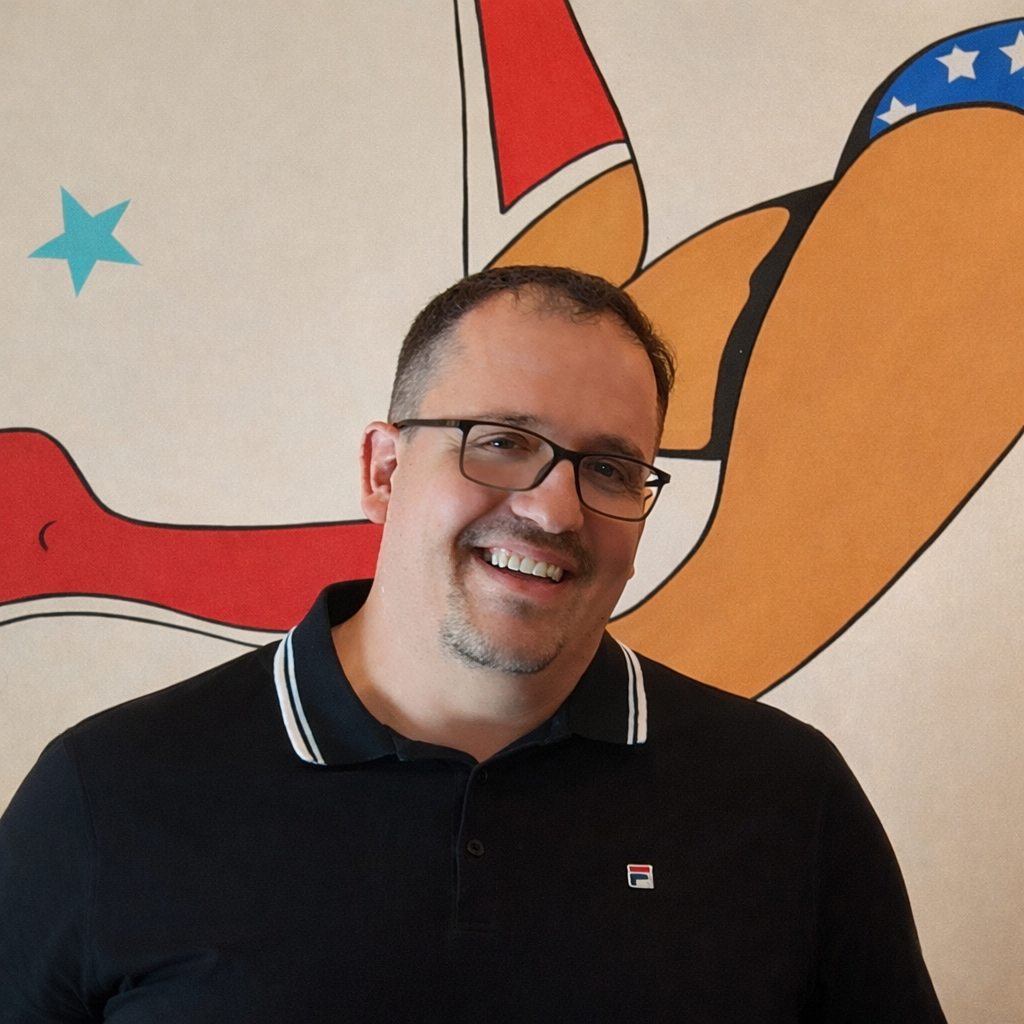
So first of all, what do you do at Trackingplan?
I’m the CEO of Trackingplan, but in practice I see myself as the head of product. I’m responsible for what gets built, what gets shipped, and whether we’re solving real problems for our users.
Fundraising and hiring senior leaders are important, but product is where I spend most of my time—and where I add the most value. Staying close to the product and to our users is what keeps the company aligned and moving forward.
Thinking back to the early days, what inspired you to start Trackingplan?
The idea came from frustration. While leading product in a previous company, I was building the data organization and realized that no matter how much we invested, trust in our data never went beyond roughly 70%.
As a result, decisions were driven more by intuition than by data. We kept hitting the same ceiling: data quality. I remember my manager reviewing reports and immediately spotting inconsistencies. He was almost always right.
That’s when I understood this wasn’t only a technical problem. It was organizational, communicational, and systemic. In other areas—like infrastructure, code quality, or observability—there are mature solutions. But data reliability was largely underserved.
Once I explored the space further, it became clear there was an opportunity to build a significant company around solving a problem that was quietly costing businesses millions in wasted ad spend and poor decisions.
What’s a day in the life of Josele like?
There’s no typical day. I wear multiple hats.
I start early to focus on product and technical problems that require deep thinking. From mid-morning onward, the day becomes more collaborative: customer conversations, user interviews, and problem-solving sessions.
We begin every day with a short team sync to surface issues and define priorities. That usually shapes the rest of the day.
In the afternoons, I return to focused product work—reviewing user behavior, watching recordings, refining decisions. I also spend time reading about technology. Understanding where the world is heading helps us separate signal from noise and stay ahead of the market.
Leading a company comes with highs and lows. What’s a lesson you’ve learned that still sticks with you?
Patience.
Over 20 years of leading companies, I’ve learned that leadership is about balancing urgency with timing. You need high-quality information as early as possible—but you don’t always need to act immediately.
Most of the work happens internally: thinking, walking, letting ideas mature. Not every issue requires instant resolution. Patience builds clarity. It builds trust. It allows you to empower strong people—which I’m fortunate to have at Trackingplan.
Emotionally, you also learn that the journey is cyclical. Highs and lows alternate. Experience teaches you that there is always a way forward. The key is staying steady—and consciously celebrating the wins, because they give meaning to the difficult moments.
Outside of work, what hobbies or passions keep you balanced?
I enjoy sports and spending time with friends. That helps me disconnect.
That said, technology is genuinely my main passion. Even outside work, I’m experimenting, building small things, or exploring new tools. Curiosity about the future is part of who I am.
I also read extensively—technology, entrepreneurship, and occasionally fiction. Reading broadens perspective and exposes me to different ways of thinking, especially from other builders and founders.
Are there books, podcasts, or resources that have shaped the way you think about leadership or business?
Two stand out: Founders at Work by Jessica Livingston and Lenny Rachitsky’s podcast.
Founders at Work demystifies the early stages of great companies. It shows how nonlinear and imperfect the process really is.
Lenny’s Podcast is more tactical and product-focused. It offers practical insights from operators who are actively building. I value that level of specificity and honesty.
Both have influenced how I think about product, leadership, and long-term company building.
What’s your favorite thing about the team at Trackingplan? What makes working with them special for you?
The combination of camaraderie and seniority.
We’ve built a team of experienced people who operate with autonomy and ownership. That dramatically raises the level of conversation and execution.
I learn from them every day. Their technical depth and perspectives challenge me constantly. That makes the company stronger—and makes the work more intellectually rewarding.
Looking ahead, what’s your vision for Trackingplan in the next few years?
With the rise of AI, managing data quality should disappear as a manual task.
Our vision is to automate data reliability to the point where digital teams no longer need to supervise or audit tracking. Data quality should be a self-healing infrastructure.
In the coming years, I see Trackingplan becoming the default reliability layer for digital data—allowing companies to focus on decisions, not validation.
If you could go back to the day you founded Trackingplan, what advice would you give yourself?
Eliminate your assumptions and immerse yourself deeply in the user’s world.
I would tell myself to spend even more time understanding digital analysts—their workflows, pressures, and constraints.
And I’d remind myself that business complexity often outweighs technical complexity. Building the technology is rarely the hardest part. Making it fit real organizations and real incentives is.
The earlier you understand that, the better the company you will build.